



Audio Collection

Available Now

EPISODE

The False Divide: Philanthropy & Impact Investing

“A family that sees philanthropy and investing as different speeds of the same current will not have to choose between doing good and growing wealth.”

A client came to us recently with a simple but demanding question: How can all of my wealth express the same set of priorities?

She wanted to reach women and girls, BIPOC entrepreneurs, and communities that feel every failure in access to capital, healthcare, education, and childcare. Philanthropy was one way to do that. Impact investing was another: a way of directing capital so that it could grow while answering a more fundamental question about who benefits when it moves.

She did not want to attach a green label to an existing portfolio, nor did she see her giving as a separate moral counterweight to her investments. She asked us to hold both to the same standard of intention, and to let the need determine the tool, whether a grant, an equity stake, or a line of credit, rather than the reverse.

That distinction matters. Too often, philanthropy and impact investing are placed in separate compartments of a family’s financial life: one for values, one for returns; one measured in gratitude, the other in basis points. The division is understandable. It reflects the way the industry has organized itself, with philanthropic advisers on one side of the table and investment managers on the other. But it is not how wealth moves through the world, and it is rarely how our clients think once we get beyond the first conversation.

Every dollar leaves a mark. The question is whether its effects are accidental, tolerated, or chosen.

The False Choice

In much of the wealth industry, the language of impact has been flattened into portfolio screening: a set of exclusions, ratings, or metrics applied across an existing portfolio. Those tools can be useful. But they are not the same as deciding what capital is for.

Every investment already has an impact. The work is not to invent impact where none existed, but to notice it, and then to direct it with intention.

The same limitation appears on the philanthropic side, where giving is sometimes treated as the only “real” impact work, while investing is left to do nothing more than fund the giving. That framing sells both tools short. Philanthropy and impact investing are not competing claims on the word impact. They are complementary forms of capital, each suited to a different kind of need and a different level of risk.

Neither instrument is more serious than the other. They belong to different stages of the same problem. The question is not whether a grant is more virtuous than an investment. It is what kind of capital a particular need requires, and what that capital must be able to absorb.

Where They Diverge

Philanthropic capital carries no expectation of financial return, which is precisely what makes it useful. It can go where market-rate capital cannot yet follow: funding the technical assistance a first-time entrepreneur needs before she is investment-ready; seeding a pilot program with an uncertain outcome; or absorbing the first loss in a lending pool so that other capital can enter behind it.

Grants can move quickly, take risks that would be imprudent for a fiduciary, and fund the connective tissue that makes later investment possible: research, advocacy, capacity-building, borrower support, and the patient work of building trust. In an emergency, philanthropic dollars can meet immediate needs, for disaster relief, epidemic response, conflict zones, and vulnerable communities where no viable consumer market can reach. There is no exit pressure and no forced liquidation. The donor defines the desired result.

Impact investing does something different. Because it expects a return, it demands durability: a business model, a repayment plan, and a reason the capital will still be working ten years from now. That discipline is what allows impact to scale beyond what any individual grant can reach.

Capital becomes renewable. A loan is repaid and can be lent again. An equity investment in a founder-led business or fund can compound. The expectation of return requires a useful rigor around cash flow, governance, reporting, and the underlying strength of the model. For many mission-driven institutions, that rigor is exactly what makes growth possible.

Where They Meet

The clearest place we see philanthropy and impact investing working together is across a portfolio of partners spanning community finance, venture capital, and private credit. Each is solving for a different gap, but each depends on more than one kind of capital.

Community Development Financial Institutions, or CDFIs, offer one example. CDFIs lend to BIPOC entrepreneurs, nonprofits, and households that mainstream finance has often failed to serve adequately. Their work frequently relies on philanthropy and investment working in unison: philanthropic dollars can fund loan-loss reserves, technical assistance, and borrower support, while impact-investment capital supplies the working capital that CDFIs lend out.

Remove either piece and the model becomes more brittle.

In May 2026, as federally appropriated CDFI Fund dollars were delayed and future programmatic funding remained uncertain, one of our clients increased its investment commitments through structures like these. That capital supported small-business owners whose access to financing depended on institutions already operating at the edge of conventional lending.

Another partner we work with, LenDonate, takes a different shape. It makes private loans directly to nonprofit organizations that need capital beyond what grants alone can provide: bridge financing, working capital, or financing structured around a program’s actual cash-flow needs rather than an annual grant cycle.

The model makes visible the ecosystem required for a nonprofit to build something durable. Equity investors provide the capital that enables the lender to grow. The lender provides flexible financing to the nonprofit. The nonprofit can then focus on the work it exists to do, rather than moving from one grant cycle to the next.

We see the same pattern in private lending to regenerative farmers and in investments in entrepreneurs who often cannot access capital through conventional means. Without a friends-and-family round to fall back on, reaching a Series A, or securing the capital needed to expand a regenerative farm, can seem impossible. In both cases, impact-investment capital can stand in for the connections and collateral that the traditional system assumes everyone already has.

Donor-Advised Funds make the same point in a different register. Their assets can remain invested while being reserved for future giving: capital still moving in markets even as its ultimate destination is charitable. Within a DAF, we can curate holdings whose business models reflect a client’s impact themes, allowing the account to function as both an investment portfolio and a philanthropic vehicle. Not sequentially, but simultaneously.

Across all of these examples, the same thesis holds: philanthropy and impact investing are not substitutes. They are different tools for solving different parts of the same problem.

Measurement

We hold grants and investments to the same underlying question: Did this capital move the recipient closer to stable ground?

For a grant, we look for a theory of change agreed upon before the check is cut. What capacity, reach, or outcome should exist in a year that does not exist today? For an investment, that same theory of change has to survive contact with a repayment schedule or a cap table. We add the discipline of financial covenants and reporting cadence.

A loan-loss reserve and a pilot program cannot be measured on the same axis. What ties them together is a shared habit of asking what would have happened without this capital, then returning to that baseline on a fixed schedule, not only when a report is due.

None of this is costless. Impact investors pursuing return can drift toward the safest, most bankable version of a mission, funding the entrepreneur who was already investment-ready rather than the one who needed earlier, riskier capital. Philanthropists, for their part, can underwrite programs that were never tested against operational or market discipline, mistaking good intentions for a durable model and leaving a grantee dependent on renewal rather than equipped to stand on its own.

We guard against both by asking whether the instrument matches the actual stage of risk the recipient is carrying, not the instrument the funder finds most comfortable.

A grant that should have been a loan can flatter the donor and starve the recipient of the rigor that would have made it stronger. A loan that should have been a grant can disrupt something that a grant would have had the patience to build.

Starting With Stewardship

Owning wealth creates the freedom to deploy it. Stewardship adds the obligation to consider who else is affected when you do.

It reframes the central question from “How much do I have?” to “What will I build or protect with this?” That reframing applies with equal force whether the dollar in question is a grant or an investment.

For philanthropists, it means measuring a gift not only by the need it meets today, but by whether it strengthens the capacity of the people and institutions receiving it to stand on their own. For impact investors, it means recognizing that a return is necessary, but not sufficient. The question is not only how capital can keep working, but what becomes possible while it is out in the world.

Stewardship is the discipline that keeps both practices honest. It is why we treat philanthropy and impact investing as two expressions of the same responsibility, rather than as two separate arms of a client’s wealth.

Every client conversation begins in the same place, regardless of which instrument is eventually used. We start with curiosity: the values a client wants their wealth to express; the season of life they are in; the liquidity and income they need; how hands-on they want to be; and how much discretion matters to them.

Only after listening do we map those values to specific themes. Only then do we determine whether a given dollar should take the form of a grant, an equity check, a line of credit, or something else entirely.

That order matters. When the instrument comes first, values tend to be sorted into silos. When stewardship comes first, philanthropy and impact investing become different settings on the same dial, adjusted according to how much risk a dollar can absorb and how much return it needs to produce.

Purpose Requires Intention

Aligning wealth with purpose, whether through philanthropy or impact investing, requires disciplined due diligence, expertise, coordination, and a more intentional posture toward capital.

The right structure comes from working closely with the donor: developing solutions together, learning through feedback, and adjusting when an opportunity does or does not reflect the values they want their wealth to express. The work cannot always be reduced to a fixed set of outcomes on a fixed timeline.

That stewardship, the trust, responsibility, and accountability required to create meaningful change, is often the hardest part of the process. It is also where flexibility matters most.

Sometimes no existing organization fits the need. Philanthropic funders willing to take on early, unproven risk can create the validation and infrastructure that later allows impact investors to enter with capital capable of generating returns. Likewise, impact investors open to more flexible structures, sometimes accepting a different risk or return profile from the market default, can fill gaps where straightforward philanthropy would fall short, particularly for people who need support now.

Treated as points on a continuum rather than fixed categories, philanthropy and impact investing can be matched more precisely to the need and opportunity in front of them.

Wealth in Motion

We return often to the phrase “wealth in motion” because it captures something the industry’s usual categories miss. Philanthropy, investing, and the family structures that hold both are all ways of deciding how wealth moves through the world, and who it touches along the way.

A family that treats its foundation, Donor-Advised Fund, private investments, and operating businesses as separate compartments will always feel a tension between “doing good” and “growing wealth.” A family that sees them as different speeds of the same current will not.

Wealth in motion must also survive a handoff. How a family teaches the next generation to move between philanthropy and investing matters as much as how the current generation does it. We have seen the instrument-based divide reproduce itself when a foundation board and a family-office investment committee never speak to one another, leaving heirs to inherit two disconnected practices rather than one coherent set of values.

Stewardship becomes inheritable when heirs learn to ask the same questions of a grant and an equity check: Who benefits? What risk is being carried? What does this capital make possible that other forms of money cannot?

The tools will change, but the obligation will not.

For Bespoke, the work of an impact practice is not choosing between philanthropy and investing. It is recognizing that both address the same core questions, and allowing impact, expressed through whichever instrument the moment calls for, to become the standard the whole portfolio is built to meet.
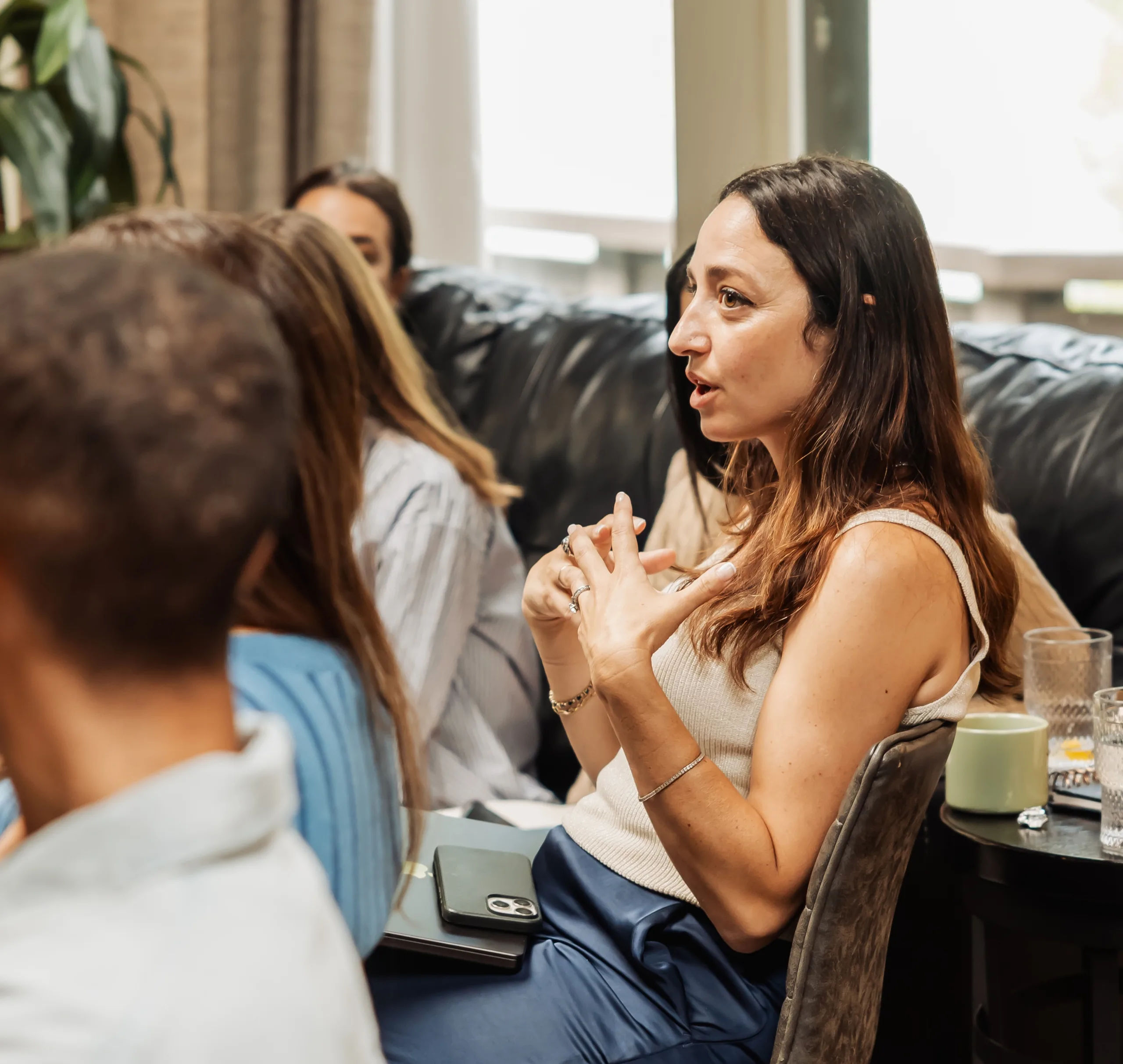

Philanthropy as Wealth in Motion

To give away money is an easy matter and in any man’s power. But to decide to whom to give it and how large and when, and for what purpose and how, is neither in every man’s power nor an easy matter. — Aristotle

Owning wealth suggests freedom to deploy it however you like. Stewardship retains that freedom, yet marries it with an obligation to consider who else is affected. It asks not only what this capital can do for you, but what it must do beyond you.

Reframing inheritance as stewardship rather than ownership shifts the relationship to capital from entitlement to responsibility. The inheritor receives not just assets, but a mandate to shape the arc of their impact across generations, whether the wealth sits in a business, a portfolio, or a pool of philanthropic capital.

For first generation builders, the work of creation often leaves little room for that question of why. The reckoning tends to arrive late and suddenly: a diagnosis, a rupture, a death. At that point, wealth is clearly going to outlive its maker, and the real issue becomes what travels with it.

This is where the next generation appears. They are not a problem set, but the family’s human capital. They bring skills and perspectives the founders cannot have. The task is to mentor them, let them make real but bounded mistakes, and invite them into decisions long before any transfer is formalized.

A better path treats stewardship as plural. One family member may run the operating company, another may lead the family’s philanthropy, a third may focus on values aligned investing. If the underlying principles are shared, each expression strengthens the whole.

Philanthropy as a Generational Bridge

Philanthropy is often the most reliable bridge for meaning between generations. It offers a shared project in which money is not just discussed as risk and return, but as a proxy for care, attention, and responsibility.

Raising genuinely philanthropic children begins with action. Parents who involve children early in giving decisions teach them that money has direction. The goal is to build the habit of discernment: how to evaluate a charity, question its model, and understand who is truly being served. Over time, the most powerful philanthropic voices in a family are those the next generation discovers for themselves, in response to the world they inhabit, not the world their parents remember.

This stance has shaped how we operate as a firm. Our revenue is tied to assets under management, yet we routinely work with families to give assets away. At first glance that runs against our interest. We do it because we believe that money held without purpose hollows out both the asset and the owner. Helping clients move capital to where it can do work is, in our view, part of the mandate of stewardship rather than a concession to it.

Structuring Your Charitable Giving

The architecture of a family’s giving should emerge from what they care about, not from a pre-packaged product menu. We have a 3-step process:

  1. Identify passions — Multiple conversations to surface the client’s genuine passions and how giving can address them. Some arrive knowing; others need guided discovery.
  2. Vet charities — We rigorously vet potential partners through hands-on due diligence: traveling to locations, meeting leadership face-to-face, assessing operations and culture, negotiating reporting metrics.
  3. Ongoing monitoring — Philanthropy, like investing, requires an ongoing feedback loop. We ensure charities continue doing what they committed to, meeting agreed metrics, maintaining direction.

Within this structure, clients face an early choice: direct or indirect impact.

Direct impact means serving affected people immediately. Indirect impact aims at influencing systems, via education, technology, or institutional reform, usually with longer time horizons but broader reach. That choice shapes the charities we evaluate, the metrics we prioritize, and the cadence of giving.

Sometimes, no existing organization fits the vision. In those moments, philanthropy becomes entrepreneurial. One client’s broad commitment to racial and gender equality narrowed into a focus on women of colour disproportionately affected by trafficking. We pinpointed the area of greatest need and found no comprehensive walk in services. Rather than scale back, the family created a new charity and brought in an experienced anti trafficking group to run it. Here, the mission dictated the structure, not the other way around.

Sophisticated structures do not make philanthropy virtuous, but they often make it possible at scale. The choice of vehicle has consequences for taxes, timing, and the balance between family and charitable beneficiaries.

Charitable Lead Trust (CLT)

  • Pays an annuity to charity for a set term; what remains goes to family.
  • Suits clients with structured, predictable giving and high basis assets or cash.
  • Counterintuitive upside: if trust assets grow faster than the assumed IRS rate, the excess can pass to heirs free of additional transfer tax.

Charitable Remainder Trust (CRT)

  • Pays an annuity to the client or family; what remains goes to charity at the end of the term.
  • Tax exempt wrapper: low basis assets can be sold inside without immediate capital gains, which are recognized gradually through annuity payments.
  • Powerful for mined Bitcoin, appreciated stock, or investment real estate where an outright sale would trigger substantial tax.

Donor-Advised Fund (DAF)

  • An intermediary charity: contribute assets, take a deduction at fair market value, then recommend grants over time.
  • Lower friction than a private foundation and straightforward to set up.
  • Popular for Bitcoin, since low basis coins can be contributed for a full FMV deduction without realizing gains, though most sponsors still force quick liquidation.
  • We work with DAFs that permit holding Bitcoin and apply a “stoplight” framework to time sales rather than selling on day one.
  • Important fine print: sponsors technically retain discretion to decline grant recommendations, even if they typically approve requests for qualified charities.

For some families with meaningful Bitcoin holdings, this is no longer just a speculative position; it is a pool of capital that could be put to work. When coins have appreciated significantly, choosing to move a portion of that gain into philanthropic vehicles can turn sharp price moves into a more predictable flow of funding for the causes they care about. The technical steps are familiar enough: pick the right structure, understand the tax treatment, be specific about what the money is meant to do. The more important shift is conceptual. Instead of leaving Bitcoin in its own speculative corner, the family is bringing it under the same stewardship lens that applies to the rest of the balance sheet and asking it to contribute to their longer story of impact.

Investing as Part of the Same Story

The portfolio also has the potential to be an expression of your philanthropic values. For some clients, this might be viewed as a point of friction. They are comfortable funding a shelter for trafficking survivors, less comfortable examining whether their equity holdings profit from supply chains that rely on forced labor.

We encourage families to see their investments as the complement to their giving, not its contradiction. A client who cares about human trafficking might refuse to hold companies implicated in slave labor allegations, then actively allocate capital to communities with entrenched racial inequality. In their minds, the public equity allocation is no longer a neutral backdrop; it is part of the same story.

Doing this well is operationally demanding. It requires what we call one offs per client family. Each set of values leads to a different pattern of exclusions, tilts, and private allocations. The due diligence is significant and cannot be automated without flattening the nuance out of it. Traditional firms, organized around scale and efficiency, often decline to go this deep, because efficiency is where their profitability lies.

We reject the assumption that bringing values into the portfolio necessarily means accepting weaker returns. In public equities, where most of the capital lives, tilting toward sustainable or values-aligned companies has not been shown to materially impair performance. In some cases, it may improve it. A company that intends to be around for the long term and manages environmental, social, and governance risks as a matter of survival is not obviously a worse bet than one that does not.

Deeper impact vehicles present different questions. Private credit that funds regenerative agriculture, venture capital backing underrepresented founders, or community development finance can all play a role. They come with distinct liquidity profiles, risk distributions, and time horizons, just as any private market investment does. The trade-off is not impact versus return. It is which part of the portfolio is asked to carry illiquidity, how much, and for how long.

One helpful way to see this is as an impact spectrum:

  • Public equities
    • Shallow impact expressed through exclusions or modest tilts.
    • Shareholder voting and activism can deepen this slightly, especially where coalitions push for specific corporate changes.
  • Municipal bonds and certain credits
    • Closer to the ground, with capital flowing into identifiable communities and projects.
    • Can pair income generation with clearly traceable impact.
  • Private credit
    • Targeted funding with defined use of proceeds covenants.
    • Greater control over where and how capital is deployed.
  • Private equity and venture capital
    • Deepest, most concentrated impact, often backing specific founders, innovations, or community strategies.
    • Requires families to accept long lockups in exchange for focused impact and potentially higher returns.

Across this spectrum, every position has impact; capital always lands somewhere and shapes something. The question is whether a family is deliberate about that effect or content to let it remain accidental.

Common Myths About Impact and Returns

Once families begin to see investing and giving as parts of the same system, a set of persistent myths tends to surface.

The first is the client who declares that they only care about impact and do not need returns. It sounds noble, but taken literally it erodes future capacity to give. If you consume principal to maximize immediate impact, you may limit what later generations can do in your name. Preserving and prudently growing assets is not greed by another name; it can be a way of extending impact across decades.

The second is the client who claims not to care about impact at all. Typically, this translates into a desire for maximum growth with minimal friction. Yet when we move from asset allocation to legacy planning, values surface anyway. Few people, when pressed, are indifferent to the way their wealth shapes the world their children live in. Even those who begin the conversation by insisting on neutrality often find that by the end, they are articulating preferences and red lines they didn’t realize they had.

The Family Business Question

These tensions become especially visible when the asset in question is an operating business rather than a securities portfolio. In recent years, some families that sold operating businesses to private equity are beginning to question that decision. A clean liquidity event and a handsome multiple can feel like a victory, but may later be seen as the moment they swapped a community building, employment generating asset for a pool of financial capital that now has to be stewarded in far more abstract ways.

In response, we see more families choosing to retain the business as a core family asset and as a primary tool for impact and stewardship. The company can be run with the same discipline as any investment portfolio, yet held in mind as something more: a site of identity, belonging, and local impact. The real choice is between a narrow view of wealth as financial capital alone and a broader one that understands the business as social and human capital as well.

Intersectionality and Depth

As younger generations step into these questions, many bring with them an instinct for intersectionality. They are less interested in scattering small gifts across dozens of unrelated causes, more interested in going deep on a problem and following its roots into other domains. Educating girls in rural communities, for example, becomes not only an education intervention but a climate strategy, a public health strategy, and an economic development strategy. The United Nations’ Sustainable Development Goals capture this interdependence: progress on one often accelerates progress on others.

The implication for families is clear. You do not need a dozen causes to be consequential. You need a small number of commitments you understand well, with partners you trust, and a willingness to follow complexity rather than flatten it.

Living as a Steward of Wealth

Stewardship is not just about the tools and structures you use, but about the posture you take toward wealth. It stands in direct contrast to hoarding: it treats each unit of currency as a decision, whether that decision takes the form of an investment, a philanthropic grant, or a purchase at a checkout counter. Many of the families we work with want their capital, in all its forms, to be in motion toward something that feels worthy of the effort it took to build it.

The coming decades will see an unprecedented transfer of wealth, in size and in character. Assets will change hands, but so will narratives. The families who thrive will be those who treat that transfer not as a problem to be managed away, but as a chance to declare, together, what they believe their wealth is for.


This information is intended for general educational purposes only and should not be construed as legal or investment advice.

A Better Way to Prepare the Rising-Gen

Here’s a thought: Aspen trees here in Colorado rarely grow as separate individuals. What looks like a grove is often a single organism, connected through a massive underground root system.

Many of the visible trunks are genetically identical shoots, all drawing strength from the same resilient foundation. The root system can spread for centuries, and after a fire or other disruption, new shoots emerge quickly, allowing the grove to regenerate and thrive.

It’s a system built for endurance, adaptability, and fortified by adversity.

Families work the same way. Preparing the rising generation isn’t just about transferring the visible structure of assets or legal arrangements, it’s about cultivating the deeper ecosystem of values, education, and relationships. These are the shared roots that allow each generation to grow strong, recover from setbacks, and sustain the family’s legacy.

With over $100 trillion set to transfer to the next generation, the rising-gen are asking: How do I grow this wealth with autonomy, purpose, and moral clarity?

And in doing so, they navigate subtler pressures: identity, legacy, and the unspoken expectations that shape how families thrive over time.

An Education Ecosystem

Legacy wealth management no longer fits what today’s families need. That model was built on hierarchy, opacity, and passive succession: “Dad’s lawyer handles it while everyone else listens.”

What families really need now is an inheritor education ecosystem. One that empowers heirs on how to think, not just on how to manage.

Here’s how such a team might look:

  • A philanthropic architect who helps families understand how to align mission and impact with deploying capital.
  • A cross-border legal educator who can teach complex structures: digital-asset trusts, international regulation, resilient wealth-transfer.
  • Specialists in technology, climate, Bitcoin, geopolitics, and others, that helping heirs understand the world they’re inheriting so they can navigate it wisely.

In short: wealth transfer is not just a transaction. It’s human development.

Why Preparing the Next Generation Matters

There is strong evidence that families who invest in heir education, governance, and shared purpose have better long-term outcomes:

  • Transparent, Ongoing Communication

    Successful families keep open, age-appropriate conversations about money, legacy, and purpose going, adapting them over time so each generation grows up understanding the values behind the wealth.
  • Allowing for Failure and Autonomy

    Encouraging thoughtful risk-taking, entrepreneurship, and even failure helps build resilience. When heirs are allowed to try, fail, and learn, they develop the grit and creativity needed for long-term stewardship.
  • Philanthropic Engagement

    Involving younger family members early in charitable or impact-oriented activities fosters social responsibility and a sense of ownership in the family’s broader legacy.
  • Stewardship Over Succession

    Many families now emphasize that success is measured not only by preserved financial capital but also by strengthened social capital, shared purpose, and intergenerational alignment.

A Legacy That Breathes

Preserving wealth alone isn’t enough. What endures, like the Aspen system beneath the soil, is the living ecosystem that supports growth across generations.

A system that teaches:

  • Why you give, not just how
  • How to engage, not just how to own
  • Who they are becoming, not just what they inherit

What sits at the heart of what we do at Bespoke is a fundamental value for long-term thinking, not quick exits. And we believe that wealth, at its best, is inseparable from stewardship, purpose, and gratitude.

Consider that legacy isn’t measured by what we leave behind, but by how we prepare those who come after us. It takes shape in the daily practice of noticing, valuing, and expressing gratitude along the way.


This information is intended for general educational purposes only and should not be construed as legal or investment advice.


Preparing Heirs for Responsibility

Preparing Heirs for Responsibility, Not Just Access

Many of our clients express concerns about preparing their heirs for what they perceive to be the social responsibility of inheriting wealth. While not all clients share this view, those who do tend to feel particularly strongly about the need to prepare their descendants for this responsibility, which often translates to philanthropy. This article addresses how families with this worldview can prepare younger generations for inheriting wealth in a socially responsible manner.

A Simple Life Lesson

The Lilly Family School of Philanthropy at Indiana University conducts extensive research on philanthropic behaviors across lifespan. This seems intuitive enough, but their studies consistently suggest that early exposure to philanthropic activities can significantly influence one’s propensity to engage in giving and volunteering in adulthood.

Years ago, a colleague described to me the steps she took to educate her young children in social responsibility and philanthropy. In addition to modeling with her own giving, once each of her children attained eight years of age, during the holidays that child would be “given” $50 to donate to charity. My colleague would also teach that child how to use charitynavigator.org and guidestar.org to research the charities that most efficiently address the causes the child wished to support.

In this way, her children not only learned about philanthropy, but they also learned the importance of evaluating charities so they could give more effectively. As her children grew older, my colleague would periodically increase their annual charity allocation until, upon attaining 18, she would give $500 to the child for a donation to his or her favorite charity or charities. This simple lesson provides the framework for how the family can educate younger family members about social responsibility.

The Role of Legal Structures in Teaching Social Responsibility

Private Foundations

Wealthy families typically have at least one legal structure through which socially responsible education can take place. Historically, wealthy families have used private foundations as the cornerstone for this education. With a private foundation, heirs could serve as members of the foundation’s Board of Directors or, alternatively, could serve in a more limited advisory role (e.g., to determine specific grant recipients) to the Board. In this way, young family members can begin learning about philanthropy – and seeing its impact – before reaching their teen years.

However, utilizing a private foundation for this education has limitations. First, members of the Board have a fiduciary duty that is often overlooked. Thus, placing minors in this position is ill advised. Moreover, a role with the family’s private foundation is, at best, limited to that foundation’s charitable activities. If it is a grant-making foundation, the activities are limited to its grants; if it is an operating foundation, the heirs may also be able to experience the “hands on” charitable work being done by that foundation.

Regardless of the type of foundation (operating vs. non-operating), involving heirs in only the foundation has additional limitations. First, the family’s philanthropy is often accomplished through multiple avenues, not just a foundation. For example, the family may have one or more charitable trusts. Thus, the foundation offers only limited transparency into the family’s total philanthropy.

In addition, many wealthy families also utilize impact investing to create a social impact with their non-philanthropic assets. By definition, involvement limited to the family’s foundation can, at best, provide visibility only to the investments of the foundation. Since foundations frequently encompass only a fraction of the family’s wealth, visibility limited to the foundation does not give heirs a complete picture of how the family’s wealth – not just its philanthropic dollars – are impacting society. Ideally the heirs have transparency as to the totality of the family’s impact, with at least some say in the areas impacted.

As an aside, Donor Advised Funds have gained in popularity in recent years due to their simplicity, reduced costs, and lack of compliance headaches as compared to private foundations. In theory, an heir’s participation in the family’s donor advised fund would be substantially similar to their participation as an advisory member of the family’s private foundation’s board.

Private Trust Companies

A relatively recent legal development, the advent of Private Trust Companies, is changing how family’s address philanthropy and thus social responsibility with intergenerational wealth. A Private Trust Company (PTC) is a trust company controlled by the family and established specifically to serve as the trustee of the family’s irrevocable trusts. (PTCs are in response to the perceived conflict, particularly with younger generations far removed from trust creators, between descendants, on the one hand, and trustees, on the other.)

PTCs are currently available by statute in only a limited number of jurisdictions, but most of these jurisdictions not coincidentally are also the top U.S. trust jurisdictions due to their favorable trust laws. Our preferred PTC jurisdictions are Nevada, South Dakota, and Wyoming, but others also have merit.

General PTC management is provided by a Board of Managers, typically comprised of family members and independent outsiders, including an administrator in the selected jurisdiction. Significantly, the family can select which jurisdiction’s laws are most appropriate and advantageous for them, given their assets, goals and objectives, desire for a regulated versus unregulated PTC, etc.

More granular PTC management is provided by a handful of PTC committees, which often include the following:

  • Philanthropy Committee
  • Investment Committee
  • Owner Education and Family Governance Committee
  • Discretionary Distribution Committee
  • Amendment Committee
  • Audit Committee

The first three of the committees listed above may be limited to family members, and the Philanthropy and Investment Committees in particular create the opportunity to give heirs a holistic view of the family’s philanthropy and socially impactful investments; as the heirs age, their participation can increase accordingly, giving them increased visibility in their areas of interest. For younger heirs, sub-committees allow targeted, limited participation in these key areas.

Also relevant here, the Owner Education and Family Governance Committee creates the framework for participation and decision-making going forward. More specifically, this Committee develops the family’s policies and guiding vision and values that regulate family members’ roles, rights, and responsibilities with the family enterprise and with each other. The overall goal of these activities is to prevent the splintering of the family and family enterprise in future generations. Studies show that the potential splintering of the family is far more likely to dissipate intergenerational wealth than loss of capital, particularly as the family moves multiple generations away from the original wealth builder(s).

Conclusion

The legal structure(s) adopted by the family can have a significant impact on younger family members’ understanding of social responsibility and philanthropy. More so than a private foundation, a private trust company can give the family an ideal training ground for teaching social responsibility, and PTCs provide multiple avenues for encouraging areas of interest, including philanthropy and investments via committees and sub-committees. When generational wealth is at play, a PTC can provide a structure that encourages family harmony over generations, reducing the likelihood of wealth dissipation.

PTCs are not a panacea, however, and there are hard costs and administrative burdens the family should consider. But under the right circumstances, a PTC may provide the best structure for family involvement in social responsibility, while also providing a succession vehicle for the family’s intergenerational wealth.

The Bespoke Group provides strategic guidance at every step—helping you design an ideal structure and personalized giving strategy that reflects your values, ideals, and passions. We work closely with you to ensure that both your structure and philanthropy drive meaningful impact in the areas that matter most.


If you’re interested in learning more about Bespoke’s approach to private wealth management and how we can help you build a secure financial future, we invite you to reach out to us directly. We’d be happy to set up a confidential consultation at your convenience.

Thank you for considering Bespoke as your partner in wealth management. We look forward to the opportunity to work with you.

This information is intended for general educational purposes only and should not be construed as legal or investment advice.

Your Queue

0:00 0:00