



Audio Collection

Available Now

EPISODE

Redefining the Family Office for a New Era of Wealth
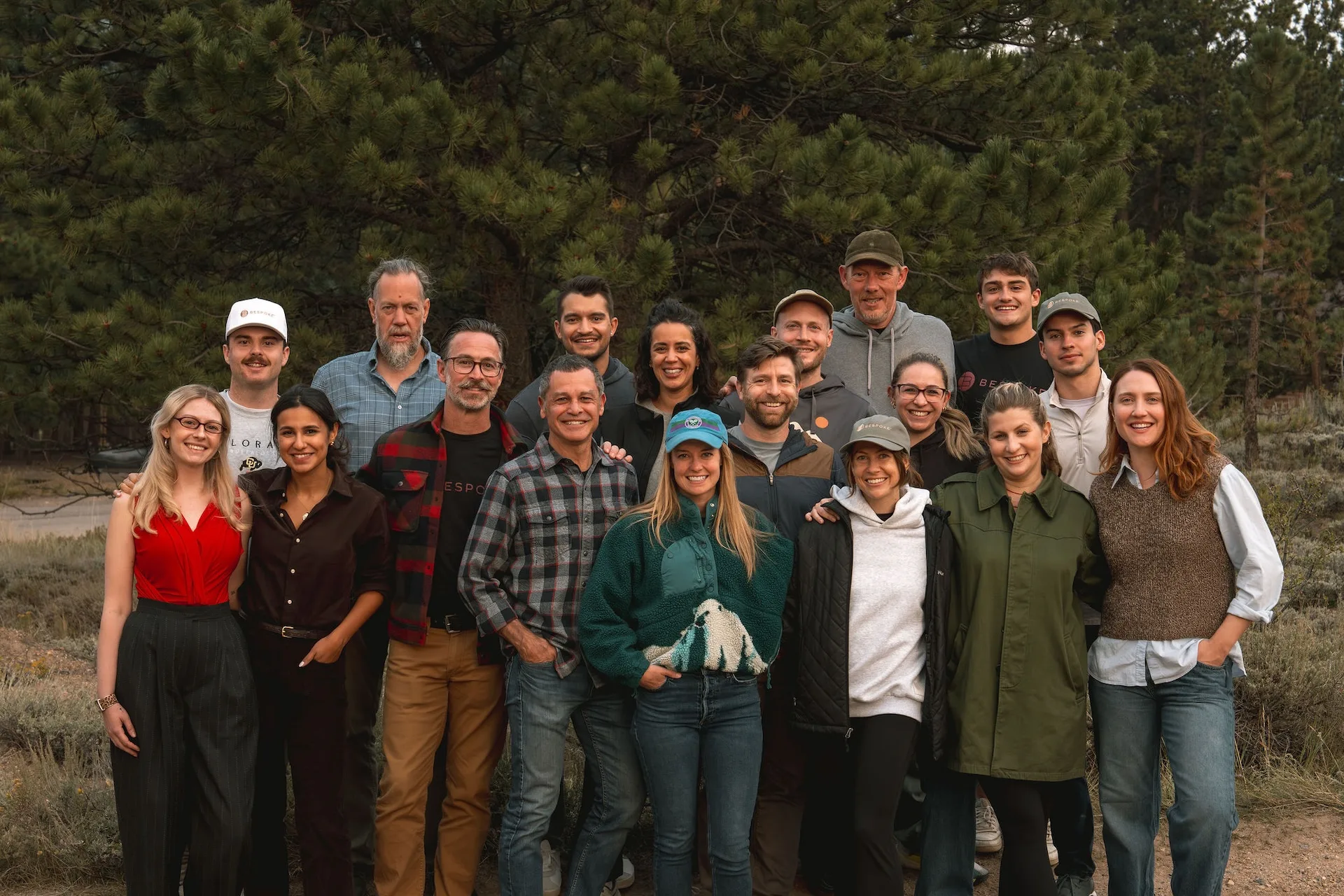
Family offices have historically served as the quiet custodians of wealth: discreet, deliberate, and designed to provide long-term alignment between capital and values. They were built to shield wealth from external interests and maintain continuity across generations. However, the modern context—defined by speed, volatility, and digital transformation—means this legacy model is increasingly out of sync with our current financial landscape.

Globally, more than 12,000 single-family offices now manage an estimated $6 trillion in assets—a number that has surged 10x since 2008, according to EY. Yet even as wealth expands and diversifies, many family offices still operate under outdated assumptions: that wealth is static, locally concentrated, and best preserved through conventional channels. These legacies limit agility, risk appetite, and values alignment at a time when capital itself is being redefined.

A recent report from The Economist Intelligence Unit, in collaboration with DBS, confirms a growing demand for tailored, purpose-driven solutions. The modern family office is being reimagined—not as a static repository of wealth, but as an agile platform for deploying capital in line with long-term aspirations.

The Great Recalibration

In 2023, 68% of next-generation wealth holders said they plan to overhaul their family office structure within the next five years, according to Campden Wealth. Their expectations are clear: greater transparency, more active engagement, and a stronger integration of purpose. Millennials and Gen Z inheritors also bring new lenses, prioritizing impact, technology fluency, and cross-border engagement. Many are digital natives with hybrid identities, navigating multiple jurisdictions, causes, and ecosystems. In this context, cookie-cutter strategies and off-the-shelf products fall flat.

This is forcing a re-evaluation of the underlying architecture. Some families are transitioning to multi-family offices (MFOs) for economies of scale and governance infrastructure. Others are building hybrid structures that blend internal leadership with outsourced execution. Yet many MFOs and traditional wealth managers focus on product distribution rather than customized strategy, missing the deep engagement required to understand a family’s identity and reflect it in a meaningful portfolio. Meanwhile, the conventional family office model remains resource intensive. It’s costly, time-consuming, dependent on human capital, and often vulnerable to generational fragmentation. In any case, structures must reflect the family’s unique values and levels of involvement.

Bespoke’s founder-led model is not a branding tactic, it is a design principle. Leadership remains directly engaged with clients, ensuring continuity, institutional memory, and strategic agility. Relationships evolve in real time, shaped by shifting macroeconomic dynamics and family priorities.

Designing for Intentionality and Agility

Too often, family offices are built around inherited templates rather than lived values. Intentional design means translating family goals into structural decisions—about governance, liquidity, tax posture, and operating cadence. Yet the industry is still dominated by product-first providers. A 2022 BCG report noted that more than 60% of wealth management firms prioritize product distribution over personalized strategy.

This leads to misalignment. Families may aspire to invest in regenerative agriculture or early- stage tech, only to be funnelled into generic fund-of-funds. Or they may want tighter oversight of direct investments but lack the infrastructure or partners to make it feasible.

Firms like Bespoke are responding by rejecting standardization in favor of tailored structuring—backed by high-touch advisory and flexible governance models. Founder-led by design, Bespoke emphasizes continuity, institutional memory, and agility. Strategic relationships are cultivated over time, not handed off.

The Family Office as Expression Engine

At its best, a family office is not a repository of money but a reflection of identity. That includes intergenerational co-investment, operating companies, philanthropic arms, and new ventures seeded by next-gen leaders. It is not about empire-building but meaning-making.

Bespoke integrates values-based investing into the architecture itself—offering families a platform to express purpose through capital. This could mean backing women-led VC funds, building climate-forward real estate portfolios, or structuring donor-advised funds that evolve with generational priorities.

One example: when a crypto-native client approached Bespoke with decentralized assets and a global footprint, existing providers struggled to accommodate the complexity. Bespoke responded by engineering a structure designed for speed, volatility, and borderless capital—merging digital fluency with strategic foresight.

Bespoke doesn’t reject the family office model—it reclaims its original intent: trust, purpose, and strategic clarity, now built for scale and with the flexibility required for navigating a fast changing world.

If you’re exploring how to align your wealth with long-term purpose and strategy, we invite you to connect with us. Whether you’re establishing a family office or rethinking an existing structure, Bespoke offers discreet, high-touch advisory tailored to your needs. Contact us to schedule a confidential consultation—we’re here to help you navigate what’s next with confidence and intention.


This information is intended for general educational purposes only and should not be construed as legal or investment advice.

Preparing Heirs for Responsibility

Preparing Heirs for Responsibility, Not Just Access

Many of our clients express concerns about preparing their heirs for what they perceive to be the social responsibility of inheriting wealth. While not all clients share this view, those who do tend to feel particularly strongly about the need to prepare their descendants for this responsibility, which often translates to philanthropy. This article addresses how families with this worldview can prepare younger generations for inheriting wealth in a socially responsible manner.

A Simple Life Lesson

The Lilly Family School of Philanthropy at Indiana University conducts extensive research on philanthropic behaviors across lifespan. This seems intuitive enough, but their studies consistently suggest that early exposure to philanthropic activities can significantly influence one’s propensity to engage in giving and volunteering in adulthood.

Years ago, a colleague described to me the steps she took to educate her young children in social responsibility and philanthropy. In addition to modeling with her own giving, once each of her children attained eight years of age, during the holidays that child would be “given” $50 to donate to charity. My colleague would also teach that child how to use charitynavigator.org and guidestar.org to research the charities that most efficiently address the causes the child wished to support.

In this way, her children not only learned about philanthropy, but they also learned the importance of evaluating charities so they could give more effectively. As her children grew older, my colleague would periodically increase their annual charity allocation until, upon attaining 18, she would give $500 to the child for a donation to his or her favorite charity or charities. This simple lesson provides the framework for how the family can educate younger family members about social responsibility.

The Role of Legal Structures in Teaching Social Responsibility

Private Foundations

Wealthy families typically have at least one legal structure through which socially responsible education can take place. Historically, wealthy families have used private foundations as the cornerstone for this education. With a private foundation, heirs could serve as members of the foundation’s Board of Directors or, alternatively, could serve in a more limited advisory role (e.g., to determine specific grant recipients) to the Board. In this way, young family members can begin learning about philanthropy – and seeing its impact – before reaching their teen years.

However, utilizing a private foundation for this education has limitations. First, members of the Board have a fiduciary duty that is often overlooked. Thus, placing minors in this position is ill advised. Moreover, a role with the family’s private foundation is, at best, limited to that foundation’s charitable activities. If it is a grant-making foundation, the activities are limited to its grants; if it is an operating foundation, the heirs may also be able to experience the “hands on” charitable work being done by that foundation.

Regardless of the type of foundation (operating vs. non-operating), involving heirs in only the foundation has additional limitations. First, the family’s philanthropy is often accomplished through multiple avenues, not just a foundation. For example, the family may have one or more charitable trusts. Thus, the foundation offers only limited transparency into the family’s total philanthropy.

In addition, many wealthy families also utilize impact investing to create a social impact with their non-philanthropic assets. By definition, involvement limited to the family’s foundation can, at best, provide visibility only to the investments of the foundation. Since foundations frequently encompass only a fraction of the family’s wealth, visibility limited to the foundation does not give heirs a complete picture of how the family’s wealth – not just its philanthropic dollars – are impacting society. Ideally the heirs have transparency as to the totality of the family’s impact, with at least some say in the areas impacted.

As an aside, Donor Advised Funds have gained in popularity in recent years due to their simplicity, reduced costs, and lack of compliance headaches as compared to private foundations. In theory, an heir’s participation in the family’s donor advised fund would be substantially similar to their participation as an advisory member of the family’s private foundation’s board.

Private Trust Companies

A relatively recent legal development, the advent of Private Trust Companies, is changing how family’s address philanthropy and thus social responsibility with intergenerational wealth. A Private Trust Company (PTC) is a trust company controlled by the family and established specifically to serve as the trustee of the family’s irrevocable trusts. (PTCs are in response to the perceived conflict, particularly with younger generations far removed from trust creators, between descendants, on the one hand, and trustees, on the other.)

PTCs are currently available by statute in only a limited number of jurisdictions, but most of these jurisdictions not coincidentally are also the top U.S. trust jurisdictions due to their favorable trust laws. Our preferred PTC jurisdictions are Nevada, South Dakota, and Wyoming, but others also have merit.

General PTC management is provided by a Board of Managers, typically comprised of family members and independent outsiders, including an administrator in the selected jurisdiction. Significantly, the family can select which jurisdiction’s laws are most appropriate and advantageous for them, given their assets, goals and objectives, desire for a regulated versus unregulated PTC, etc.

More granular PTC management is provided by a handful of PTC committees, which often include the following:

  • Philanthropy Committee
  • Investment Committee
  • Owner Education and Family Governance Committee
  • Discretionary Distribution Committee
  • Amendment Committee
  • Audit Committee

The first three of the committees listed above may be limited to family members, and the Philanthropy and Investment Committees in particular create the opportunity to give heirs a holistic view of the family’s philanthropy and socially impactful investments; as the heirs age, their participation can increase accordingly, giving them increased visibility in their areas of interest. For younger heirs, sub-committees allow targeted, limited participation in these key areas.

Also relevant here, the Owner Education and Family Governance Committee creates the framework for participation and decision-making going forward. More specifically, this Committee develops the family’s policies and guiding vision and values that regulate family members’ roles, rights, and responsibilities with the family enterprise and with each other. The overall goal of these activities is to prevent the splintering of the family and family enterprise in future generations. Studies show that the potential splintering of the family is far more likely to dissipate intergenerational wealth than loss of capital, particularly as the family moves multiple generations away from the original wealth builder(s).

Conclusion

The legal structure(s) adopted by the family can have a significant impact on younger family members’ understanding of social responsibility and philanthropy. More so than a private foundation, a private trust company can give the family an ideal training ground for teaching social responsibility, and PTCs provide multiple avenues for encouraging areas of interest, including philanthropy and investments via committees and sub-committees. When generational wealth is at play, a PTC can provide a structure that encourages family harmony over generations, reducing the likelihood of wealth dissipation.

PTCs are not a panacea, however, and there are hard costs and administrative burdens the family should consider. But under the right circumstances, a PTC may provide the best structure for family involvement in social responsibility, while also providing a succession vehicle for the family’s intergenerational wealth.

The Bespoke Group provides strategic guidance at every step—helping you design an ideal structure and personalized giving strategy that reflects your values, ideals, and passions. We work closely with you to ensure that both your structure and philanthropy drive meaningful impact in the areas that matter most.


If you’re interested in learning more about Bespoke’s approach to private wealth management and how we can help you build a secure financial future, we invite you to reach out to us directly. We’d be happy to set up a confidential consultation at your convenience.

Thank you for considering Bespoke as your partner in wealth management. We look forward to the opportunity to work with you.

This information is intended for general educational purposes only and should not be construed as legal or investment advice.

Your Queue

0:00 0:00