



BITCOIN
13 APR 2026
Bespoke & Tetra at Southpac: Explore Beyond the Panels
These resources are designed to sit alongside the conversations we’re having in Vancouver.
Here you’ll find diagrams, podcast episodes, and short briefs that unpack qualified custody, Bitcoin, and offshore structures in more depth, so you can focus on the decisions that matter.
Have a specific question? Get in touch →
Southpac Panel: Bitcoin & Offshore Asset Protection Strategies
Grab the Presentation Here
Custody Solutions and Wealth Planning for Bitcoin
Bitcoin, Custody and Wealth Planning Explained
Modern Wealth Holders and What They Need from Advisors
Funding Entities with Crypto
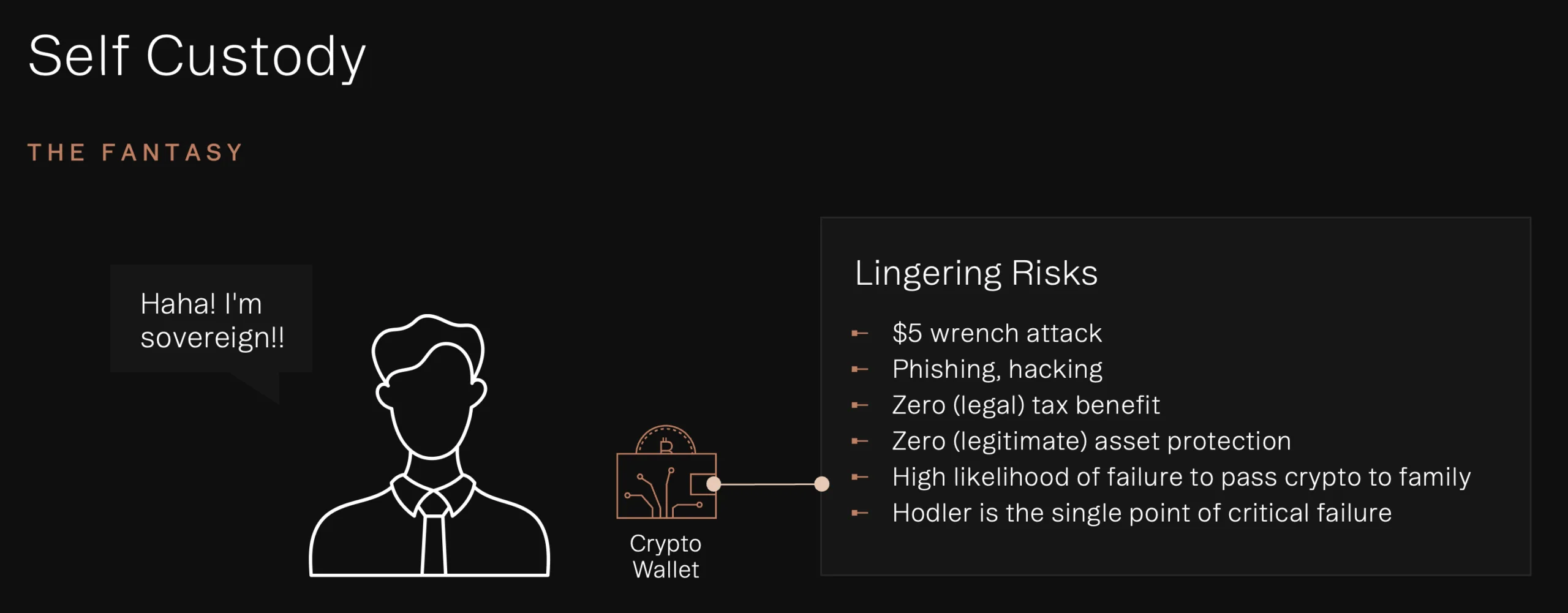
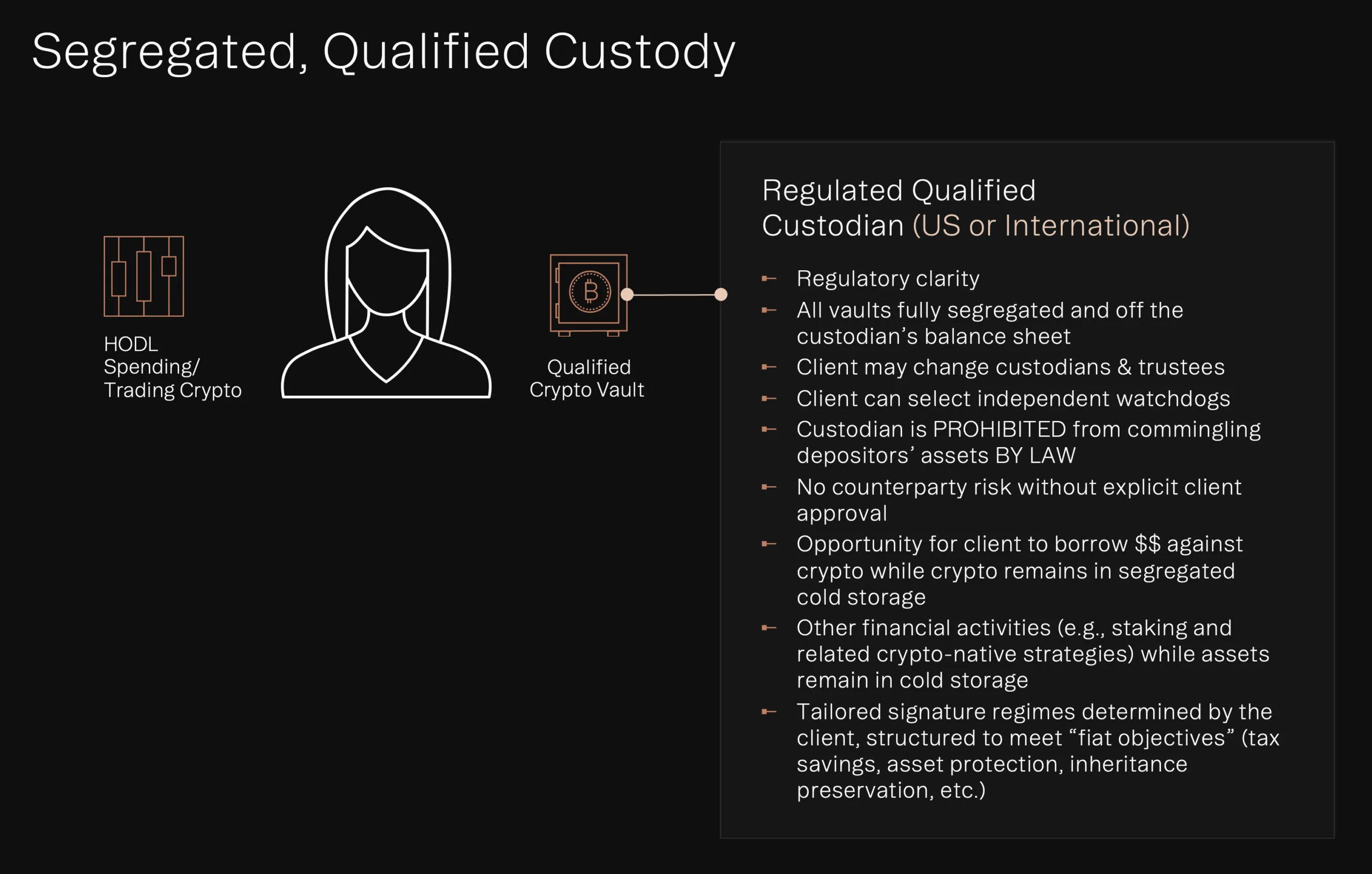
These diagrams illustrate the two primary approaches to crypto custody—self custody and regulated, qualified custody. They highlight how each model differs in terms of control, security, and operational risk when managing digital assets.
Have questions on custody solutions? Get in touch →
Additional Resources
Southpac Panel: Bitcoin & Offshore Asset Protection Strategies
- Bitcoin and its Integration with Offshore Asset Protection Strategies
- Southpac Pre-Panel Briefing
- Southpac Post-Panel Briefing
Bitcoin & Digital Assets
Wealth Strategy
- Wealth Operating System
- Don’t Sell the Family Business
- Bitcoin House View
- Redefining the Family Office
Global Investing
FAQs
Bitcoin is a bearer‑style, key‑based asset with no recovery desk. That raises the stakes: the plan must explicitly address key control, succession to those keys, and how heirs will be prepared to manage what they receive.
Self‑custody can be appropriate for smaller, transactional balances where loss would not be catastrophic and the client has real operational discipline. It becomes problematic once positions are wealth‑significant, inside fiduciary structures, or critical to family succession.
At scale, self‑custody creates operational, security, and succession risks that most families and trustees are not equipped to manage. Custodians provide infrastructure, controls, insurance, and reporting that make Bitcoin behave like other institutional‑grade assets held in fiduciary structures.
Succession should be built into both the legal documents (trusts, operating agreements) and the operational setup (custody, key management). That means named roles, clear processes, and no reliance on a single password or seed phrase no one can find.
When it becomes a meaningful percentage of net worth, appears among the client’s largest positions, or would materially affect the estate or trust if lost or mishandled. At that point, treating it as a side bet is no longer defensible.